


Dear reader,
More Budget fodder below. Not the usual ‘Budget at a Glance’. You’ve probably read that by now. This is an attempt to judge the mood it’s now left many in.
Because what matters more than anything is how the news is received by the business community itself; how the news is received by the leaders that make the decisions around hiring, firing, investing, wages and more.
Accountants Randall & Payne and event partners, wealth management experts Rathbones’ live Budget networking and expert panel event at Kingsholm Stadium certainly drew the crowds.
At times of heightened tension or crisis community becomes important. This looked every inch about just that.
There was eager anticipation (or was it just trepidation?) but also banter. This was a party, without the carefree party atmosphere. But neither was it sombre. Perhaps expectations were so low that what came for the blows they landed more softly than they might.
Or perhaps that just reflects the attitude to life of those there - that no matter what happens, their glass is resolutely half full rather than half empty.
Very best regards,
Andrew Merrell (editor).
*The Raikes Journal is the only independent news outlet in Gloucestershire approved to use the copy of the BBC local government reporting service.
* It is a digital magazine and community interest company whose supporters believe, like us, that journalism about Gloucestershire is worth keeping alive. Everything you read here - original stories about our county - is made possible by our incredible Founding Partners: QuoLux, Willans LLP, Gloucestershire College, Merrell People and Randall & Payne; our sponsors, Founding Members and wonderful paying subscribers.
If you upgrade to paid you’ll be part of this CIC too. We’re dedicated to championing the county, its businesses, charities, education and training providers, and to creating an even stronger community. And you’ll be able to see past the paywalls often put on our 2cnd and 3rd email editions of the week, that lock our archive and our Top 100 Businesses in Gloucestershire series. You’ll be able to comment on our stories too.
Usually you can sign up to support The Raikes Journal and make what we do possible (real journalism about Gloucestershire) for just £2.30 a week - or £1.80 a week if two or more people sign up at once. Or you can go all in and become one of our Founding Partners or Founding Members!
Food for Thought: The Budget Alone Cannot Deliver Growth – The UK Must Confront Deeper Barriers
According to Prowle, a professor of performance management, business, computing and social sciences at the University of Gloucestershire, the UK can only get its economy growing again if it confronts “deeper structural, political and societal barriers”.
Speaking to students, business owners and members of the public after the Budget, Prowle, who works closely with leadership development specialists QuoLux which is a Founding Partner of The Raikes Journal, said the UK’s stagnation predated the financial crisis.
The biggest obstacles to growth, he argued, lay beyond any single fiscal event.
You can read what he thinks those obstacles and solutions are here.
What businesses really thought of the Budget 2025
It’s said receiving bad news together reduces stress. Perhaps that’s why it was standing room only in Gloucester Rugby’s 1873 Club where businesspeople gathered to hear Rachel Reeves’ Budget.
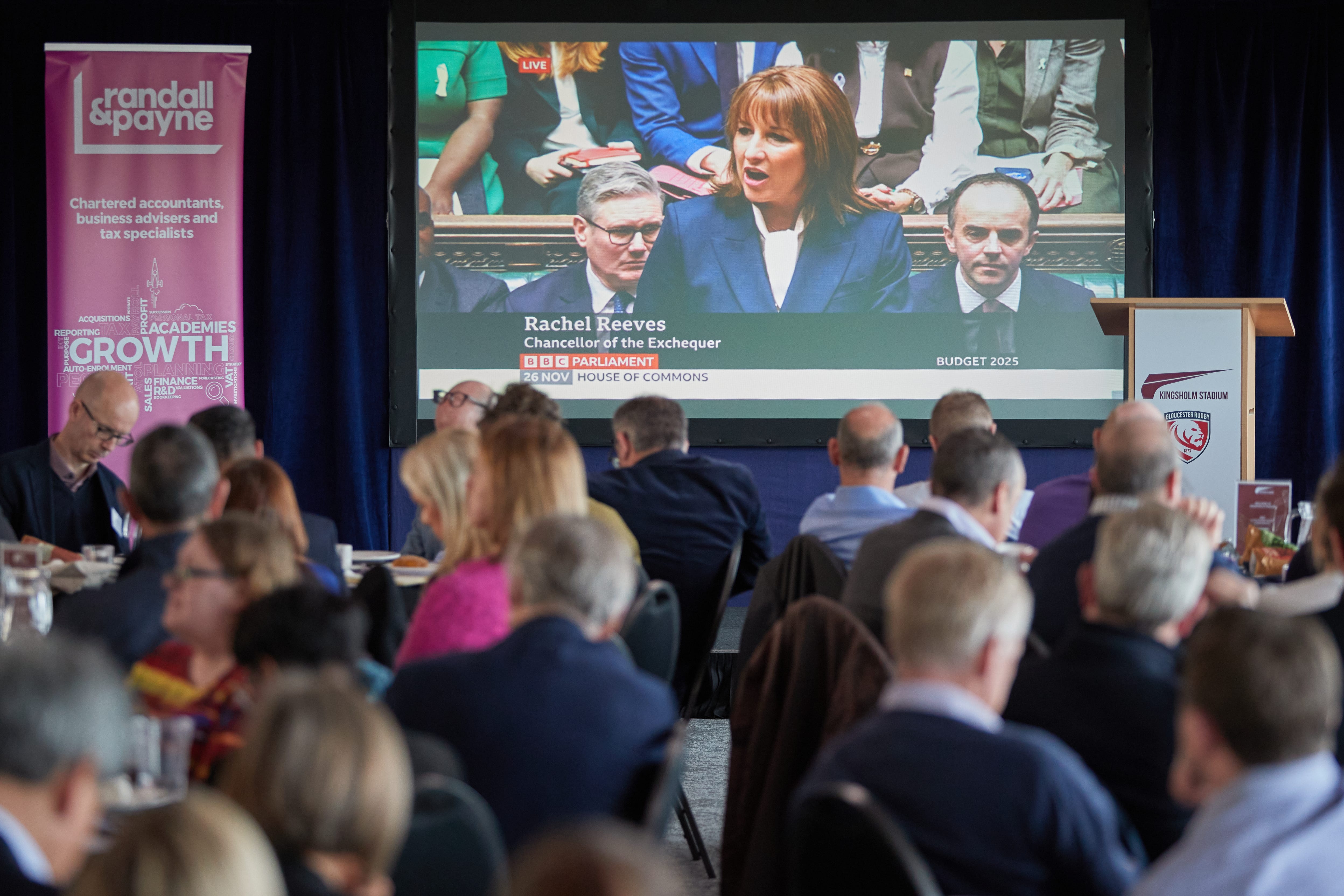
You’ll know by now that anyone hoping the Chancellor Rachel Reeves’ Budget would somehow deliver a rabbit from the hat to fix economic growth and cheer everyone up couldn’t have been wider of the mark.
Although no one really expected that anyway.
Pre-event there was a definite sense of trepidation at Kingsholm Stadium as members of Gloucestershire’s business community gathered in the 1873 Club to receive her news as guests of accountants Randall & Payne and wealth management experts Rathbones.
Probably it was the camaraderie,perhaps it was the sense of safety in numbers that stimulated so much conversation rather than any great sense of expectation for what Reeves would say.
With so many leaks, retractions and pre-statement briefings the general hope among those present seemed to be for an announcement that did the least damage.
Afterall, this was an audience still wrestling with the impact of the last Budget’s National Insurance increases and more, that for many put the brakes on growth and recruitment.
As if it had not wanted to be upstaged by Reeves herself, even the Office for Budget Responsibility (OBR) had got in on the act and published its economic forecast ahead of the main event. Quickly followed by a public apology.

Judging by their own pre-Budget comments most of those in attendance got exactly what they expected from the Budget - an increase in the steep gradient they already feel they’ve been asked to ascend.
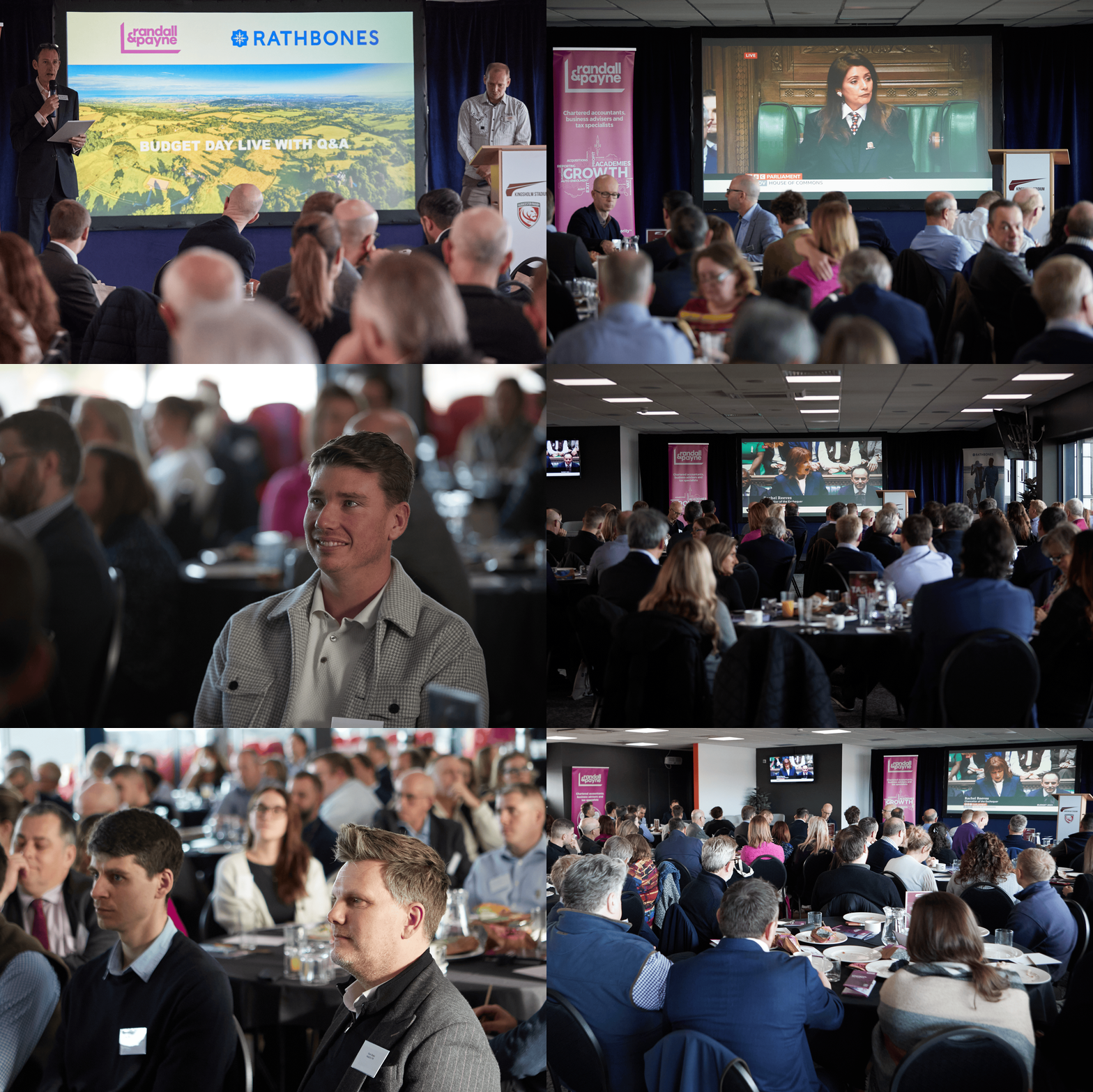
Rob Case, a tax partner at Randall & Payne, compered proceedings, which saw a pre-Budget panel of experts prepare the ground before a four-strong panel returned post-Budget for Case to quiz them some more.
And there was good news before all that, as Case revealed Randall & Payne had just become the latest Gloucestershire firm to become B Corp certified - which means it’s been officially judges as meeting the high standards of social and environmental performance, transparency, and accountability.
Will Abbott, also a partner at the Shurdington-headquartered accountants, was one of those post-Budget panelists, and seemed to catch the mood, identifying what those in the room needed at that exact moment. Not just analysis, but also reassurance.
“You’re great people. I have no doubt that business leaders out there will be resilient. I have a huge amount of confidence in that resilience. I have huge confidence that you will keep going and we will get through this together,” said Abbott.
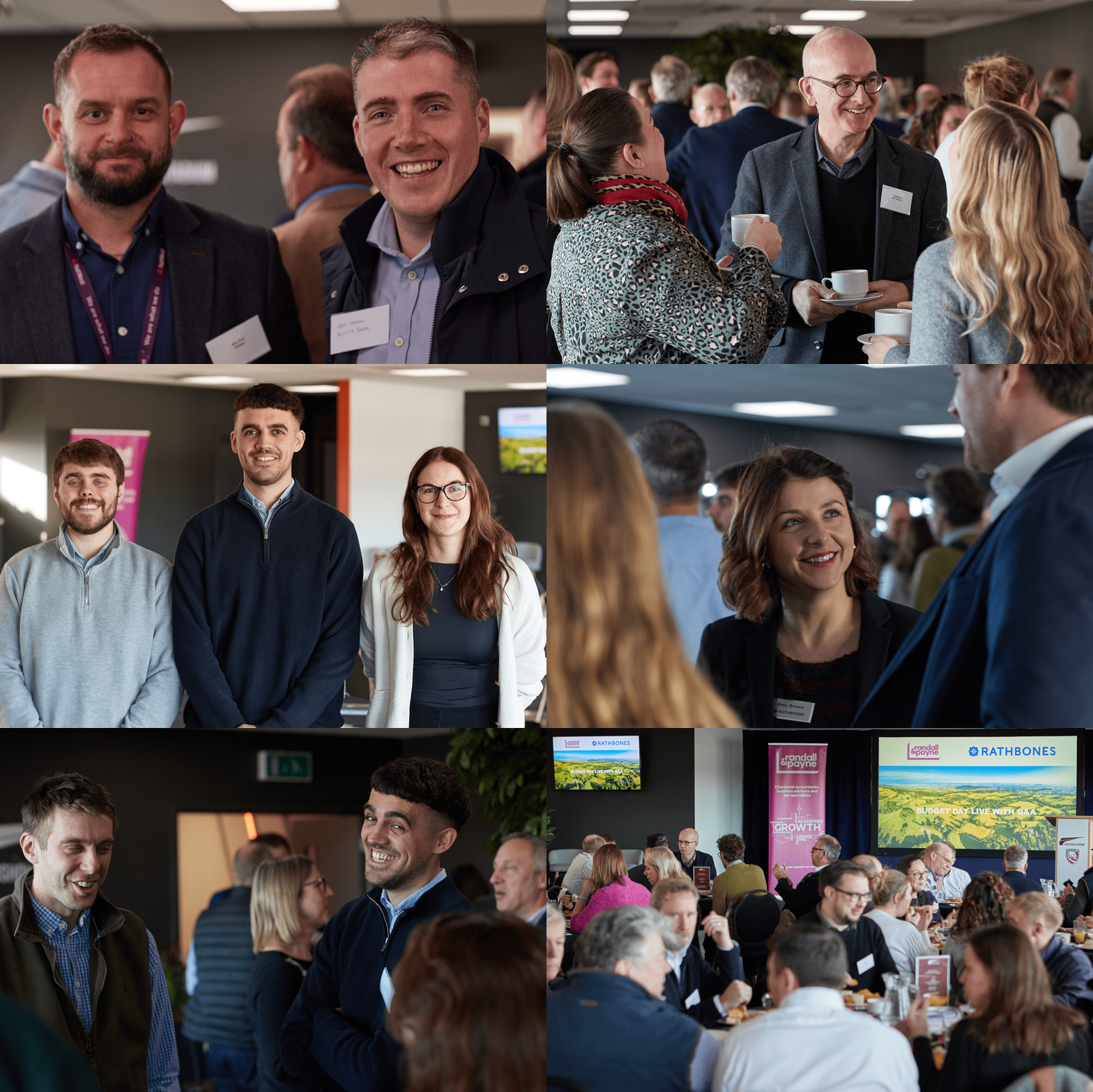
But this was also an audience determined not to be downbeat. And besides, as the event proved, they had each other - and that included the expert professional services in the room to remove some of the strain where possible.
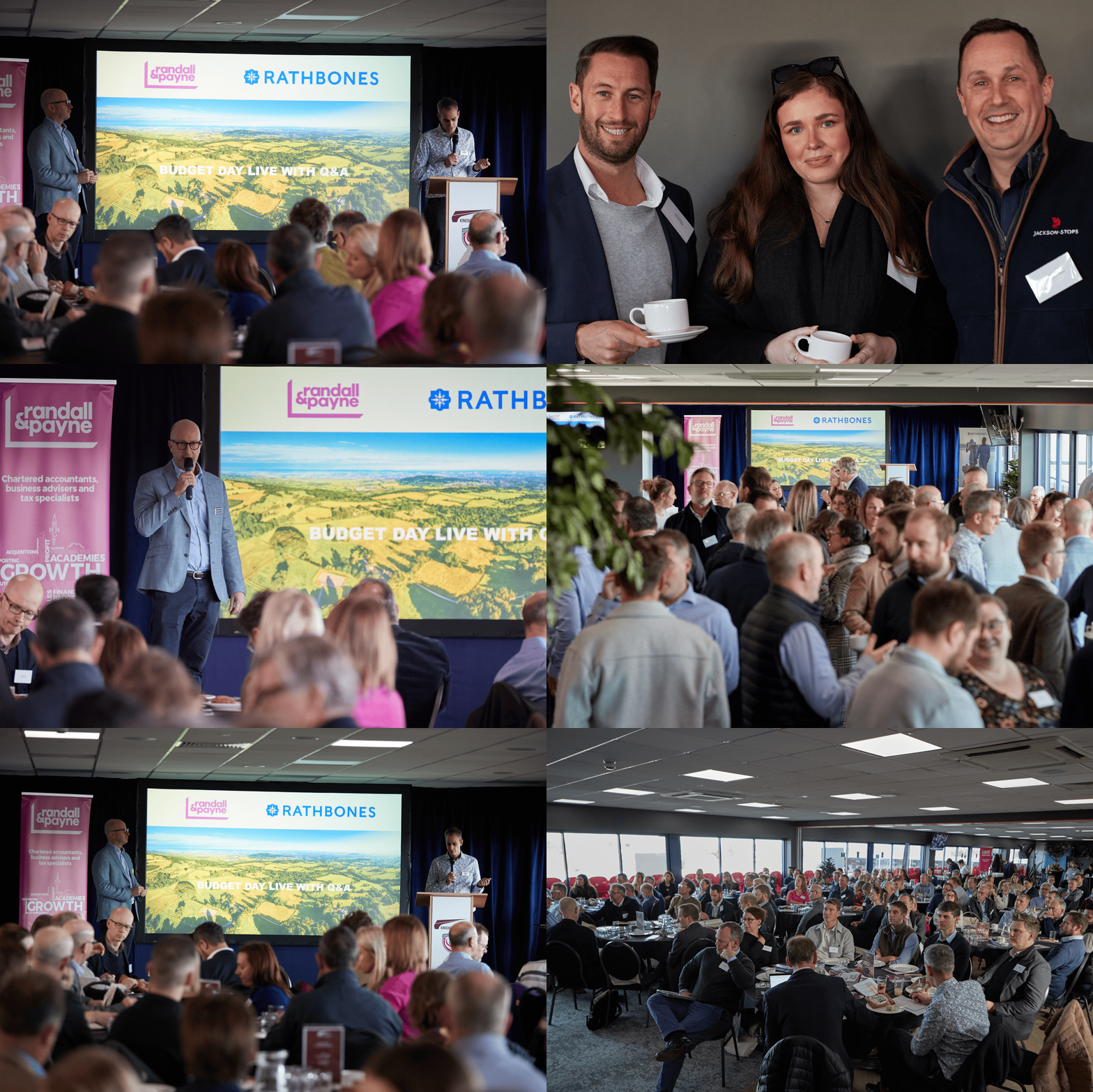
Conclude what you will from the fact more than a 100 chose to be among their peers and professional advisors rather than listen back at the office. Randall & Payne were even receiving calls the day before asking if they could find extra places.
Reeves’ insistence on using the phrase ‘budget for working people’ perplexed most of those present, who feel both the increasing burden as business owners yet consider themselves among those ‘working people’ too.
As business owners and employers they also appreciated the double edge to Reeves’ decision to increase the national minimum wage - good news for those on the minimum wage, but perhaps an extra cost putting the brakes further on any new hires for the foreseeable.
It was just one of the points of order that harked back to the pre-Budget words of James Geary, also a partner at Randall & Payne, who had been reminded of the Laffer curve.
The concept, debated by economists, suggests that as tax rates rise revenue increases, but that after a period those tax increases disincentivise economic activity and cause a fall in revenue.
The inference being that perhaps Reeves would do well to bear that Laffer in mind and perhaps cutting taxes could stimulate that illusive growth and drive more tax revenue to create a win-win.
Few managed even a wry smile when the Chancellor also announced she was launching a consultation into how to attract more entrepreneurs to the UK.
“If you build here, Britain will back you,” she told them. No one moved a muscle.

Business taxes and more
Come April 2026 minimum wage will changes as follows: Over-21s will see an increase from £12.21 to £12.71 an hour, workers aged 18 to 20 will see an increase from £10 to £10.85 an hour and 16-year-olds, 17-year-olds and apprentices will see an increase from £7.55 to £8 an hour.
Major points of interest included an expansion of entrepreneurial investment schemes, with a three-year stamp duty holiday on the purchase of shares in newly listed UK companies.
Businesses will get a 40 per cent allowance to write off more of their upfront investment costs.
Customs duty will now apply to parcels of any value in an attempt to stop high street retailers being undercut by online retailers on price.
Business rates will be permanently lowered for 750,000 retail, hospitality and leisure businesses.
This will be paid for by higher rates on properties worth more than £500,000, used by what Reeves called “warehouse giants”.
And for properties that receive a large increase in their bill there will be £4.3bn of support.
Some more points of focus on the Randall & Payne website…
Ed Wood, a senior financial planner at Rathbones, also one of the post-Budget panelists, was blunt in his summation: “She (Reeves) really had nothing really good to say. She simply did not have the numbers to be able to do anything with.”
Although the changes to venture capital trust (VCT) and the enterprise investment scheme (EIS) caught his eye, as did the change to cash ISAs.
VCT and EIS offer tax breaks for qualifying investors in early stage, higher risk UK companies. The changes are aimed at making these measures more attractive to potential investors in these early-stage, higher-risk companies.
“This is probably the biggest change, but not huge,” added Wood.
As for ISAs, how much you can save into a cash ISA annually will be cut from £20,000 to £12,000 from April 2027.
Geary’s various pre-Budget predictions were typically on the money, although he admitted to being caught out by one change.
“A lot of things were in line with what John (Wyn-Evans, Rathbones’ head of Investment Strategy) and I were expecting, with some minor differences.
“The tax threshold freeze for three years not two, which might be a clever move so she has some wiggle room come the next election.
“I don’t understand what they were doing with capital allowances. But we have to look at the detail around that.”
Reeves said a new 40 per cent first year allowance for expenditure incurred on or after 1 January 2026 would be introduced, reducing the main rate of writing down allowances to 14 per cent from 1 April 2026 for corporation tax and 6 April 2026 for income tax.
Geary also noted the changes to EOT - where a company’s shares are held in a trust. Until now a sale to such a trust was free of capital gains tax.

That relief will now fall to 50 per cent. The Treasury has estimated the change will raise an average of £0.9 billion a year from 2027.
“I didn’t see that coming,” he added, even if he had seen almost everything else.
Picking up the thread, on Abbott added: “I spend a lot of my time these days sitting on boards of various businesses.
“It is no surprise that a considerable amount of that time recently has been talking about how owners can sell their businesses or prepare for exit.”
But he signed off by reminding everyone, and raising a few chuckles as he went, that he still knew of three ways to sell your business tax-free, and his door was open.
As questions came from the floor, the microphone came to the managing partner of Randall & Payne, Tim Watkins, who was asked if the changes to inheritance tax for farmers hit hard in the last budget would have a significant impact.
Agriculture being Watkins’ specialist field.
Reeves announced that from April farmers and small business owners who are married or in civil partnerships will be able to transfer their inheritance tax allowance of up to £1 million to each other if one of them dies without having used that allowance.
“It will help,” said Watkins. “Anything extra will help, but when you consider the value of many businesses will be in excess of the allowances availiable it does not take away the challenge farmers are suffering with at the moment.”
Wyn-Evans had noted the impact on the markets of the endless run of leaks and briefings and retractions pre-Budget.
But he returned to the stage as part of the post-Budget panel with some relatively good news for those concerned about the ripple effects of Reeves’ words on investments.
“Her numbers do seem to have been met with a small vote of confidence from the markets,” said Wyn-Evans.
In March the OBR had forecast the £9.9 billion looked precarious against a weaker economic outlook and higher than expected borrowing costs. That headroom is now expected to stand at almost 21.7 billion pounds in four years’ time.