


Dear reader,
The intention in the article linked below was not to knock a clearly well-intentioned idea from the CPRE Gloucestershire to create a comprehensive brownfield database for the county in the hope it helps save our countryside and allows development at the same time. But when it’s public money being spent it’s worth asking a few questions.
The inference from the county branch of the CPRE (Council for the Preservation of Rural England ) is that if our local authorities in charge of our planning and strategic planning have a list of brownfield sites already it’s not good enough. Or at least something is not working as well as the CPRE think it can.
But then no one seems to know what to do about our planning system. What is certain is pressure to build is enormous, where to build is often contentious, that people deserve somewhere to live highly emotive, as is protecting the countryside.
When we started asking questions it didn’t take long to sense the immense pressure and tension around this subject.
Local authorities were decidedly considered, diplomatic even, in their response.
We stepped away for in independent view and asked David Jones RTPI RICS of Cheltenham-headquartered David Jones RTPI RICS chartered surveyors and planning consultants what he thought.
Evans has spent a long career advising on planning matters and is one of the many trying to encourage reform of the planning system, something also promised by our current Government.
‘Would the project help get more houses built where we want them?’, we asked hopefully.
You can read his response is below.
If I have ever felt like I’ve asked a stupid question, this was it!
(Have you ever started something that sounds positive, done so with good intentions, and suspect you have upset everyone?!).
Have a great weekend.
Best regards,
Editor | 07956 926061 | LinkedIn: Andrew Merrell | andrew.merrell@raikesjournal.co.uk
This weekend and further ahead…
Friday (today):
Panels of experts from agriculture and business and landowners line up for question-time panels at the Royal Three Counties Show from Business networking too. Plenty of networking events as well. Running tomorrow and Sunday too. More here.
Saturday:
Friends of Cheltenham Samaritans 1st Wine Festival at Pip & Jims, Cheltenham, from 7pm. More here.
Corinium Ales brewery tour and tasting from 1.30pm to 3pm. More here.
Sunday:
Stroud Arts Festival 80th Celebrations: Opera is for Everyone. Free. 2pm and 3.30pm. Booking needed. More here.
Your briefing notes…
💶 Cheltenham’s John Lewis department store, the 180,000 square foot site fronting the town’s high street, is up for sale for £22 million. London-based property investment and management firm Dukeminster has put the building up for sale through agents Knight Frank. John Lewis has more than 16 years remaining on its lease term, which delivers a total rent of £1,879,764 per annum.
👩🏽💻A new Youth Advisory Board is being established to ensure that young people play a direct role in shaping the future of Golden Valley, the nationally significant cyber, AI, secure communications and emerging technology development soon to get underway in Cheltenham, according to a press release from the University of Gloucestershire. More here.
🛬 A pilot school based at Gloucestershire Airport that trains staff for some of the world’s biggest airlines has announced a new ‘accessible’ course in its bid to open the door to more people into the high-flying profession. Skyborne’s Fly First pathway is described as a modular training pathway that begins with practical flight experience from day one. The business has its headquarters in Staverton. Cost of the programme is £67,900. More here.
⚖️ WSP Solicitors has announced the expansion of its commercial property and child law teams with the appointments of senior associate David Ashcroft and associate solicitor Jessica O’Shea. The appointments are said to be part of the firm’s strategic growth plan driven by demand for its services. Ashcroft joins the commercial team, bringing with him over 40 years of experience. O’Shea has 13 years’ experience and is a Child Panel-accredited solicitor skilled at representing children in legal proceedings.
🎉 Award-winning Cheltenham-based public relations agency, HeadOn PR, has appointed Amy Broadbent as an account executive in response to growing demand for AI search and digital PR services. Broadbent, 24, joins from national coffee brand SOHO Coffee, where she was PR, social media and community executive.
Congratulations to these three…

We like to keep up on news of our sponsors too, so here’s some…. We wanted to make a point of congratulating the family law team at Cheltenham-headquartered Willans LLP solicitors, which now has three qualified practitioners in Resolution Together.
Family lawyers Jonathan Eager and Kristie Silsby have just completed their specialist training in the Resolution Together model and join partner and head of family law Sharon Giles, who was among the first lawyers in the region to qualify.
The Resolution Together process was developed by Resolution, the national organisation for family justice professionals, to allow separating couples the chance to get legal advice and support jointly from one specially trained lawyer, helping them make informed decisions about arrangements for finances, property and children.
Eager said: “Many couples want to separate amicably and find practical solutions without the stress, delay and expense that can sometimes arise when matters become adversarial.
“It can be particularly effective where there is a shared desire to maintain a positive relationship going forward, especially when children are involved.”
You can read the full story here: Willans strengthens commitment to collaborative divorce with three Resolution Together-qualified family lawyers
The Raikes Journal is a community interest company. Everything you read is made possible by our incredible Founding Partners: QuoLux, Willans LLP, Gloucestershire College, Merrell People, our sponsors, our Founding Members and wonderful paying subscribers.
Readers who upgrade to become a paid subscriber become part of this CIC too (from £2.30 a week). It helps make us sustainable, allows you to see past the paywalls, comment on our stories, and know you’re making possible the county’s only editorially-led digital magazine dedicated to delivering quality journalism for Gloucestershire about its businesses, charities, education and training sectors.
Raikes is the only independent website approved to use the BBC’s local Government copy. It recognises Raikes as independent journalism.
‘This will not get housing built!!’ Or will it?
Is nearly £20k of public cash about to be wasted or well spent? A plan to push Gloucestershire councils to drive development onto brownfields sites reveals the simmering tensions around housebuilding.
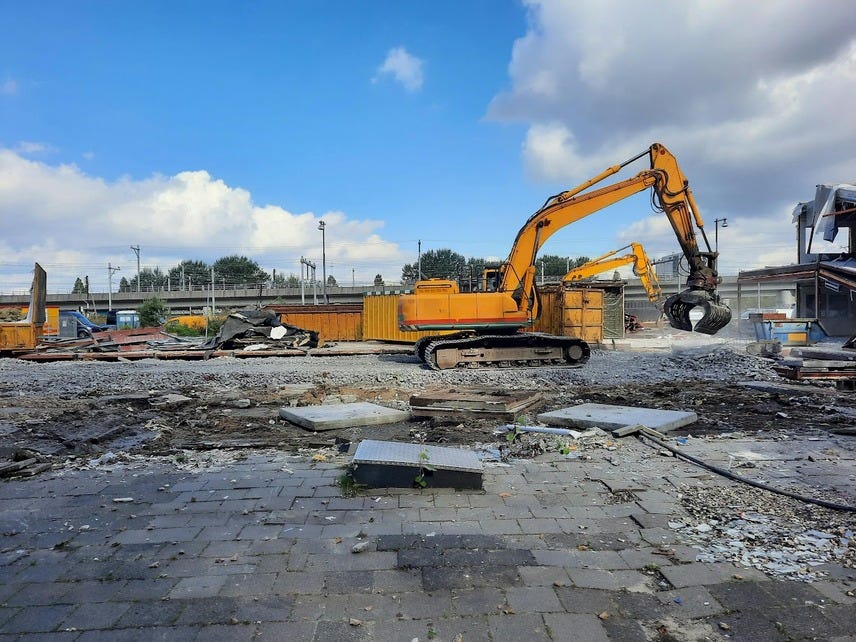
Nearly £20,000 of Lottery funding has been awarded to a Gloucestershire charity to help it try to influence the development in the county and drive it away from greenfield towards brownfield sites.
CPRE Gloucestershire, the local group of the Campaign to Protect Rural England (CPRE), has been awarded £16,500 from the National Lottery Community Fund together with £2,576 from the county-based Summerfield Charitable Trust to create a database it hopes will inform planning decisions.
The CPRE said the database, called LandWise, will be “ambitious” and “give communities a stronger voice in shaping development across the county”.
But the scheme received a decidedly cool response from councils which control planning in the county when we asked them about it.
It comes at a time of high tension around housebuilding across Gloucestershire, with local authorities under increasing pressure from central government to build thousands of homes and public disapproval surfacing at almost every turn.
The implication from the CPRE is clear – it believes more could be done to avoid greenfield development and brownfield is part of the solution.
It also states clearly that whatever councils are doing now in this respect, they are failing. Which probably explains the response we got.