


Dear readers,
Two main stories we hope will catch the eye today.
Firstly, one that focuses on the fact that two-thirds of UK firms don’t have a business plan. Which might lead many to think if they’re doing fine, why bother? But imagine how much better they could do if you knew where they’re going and why.
This is the lead story below. In an event worthy of Cheltenham Literature Festival, the authors of a new book explained how it can help managers produce a business plan and achieve that other Holy Grail for modern companies - to become purpose-led, a force for good for people and planet. Oh, and make more profit too.
It’s a grand claim, but the authors’ ideas have been road-tested by a Gloucestershire-based team that’s worked with more than 1,000 business leaders in the UK and beyond for over a decade and t has some compelling figures to back it up.
Why didn’t we lead on the second about ‘Striking’ plans to transform Cheltenham’s long-empty Cavendish House - a story that outlines plans to transform the building into a vibrant town centre destination, complete with a grand public square, elegant shopping arcades, cafés, restaurants, homes and striking public spaces?
You’ll see why when you read it.
We also have news of Hartpury University and Hartpury College’s bid to support Goals Beyond Grass in our charity of the week story, events at The Growth Hub, Cynam’s part in Cheltenham Science Festival, its forthcoming event at Hub8 MX, and a special B Corp-focused economic growth conference staged by Gloucestershire B Local.
There’s news of appointments at Sherbornes Solicitors and WSP Solicitors, a director fined for illegally storing 1,000 kg of explosives at work, and more.
Please do share our stories and if you haven’t already, sign up to our email editions. You’ll be supporting real business journalism for Gloucestershire.
Best regards,
Editor | 07956 926061 | LinkedIn: Andrew Merrell | andrew.merrell@raikesjournal.co.uk
Charity of the Week: Goals Beyond Grass
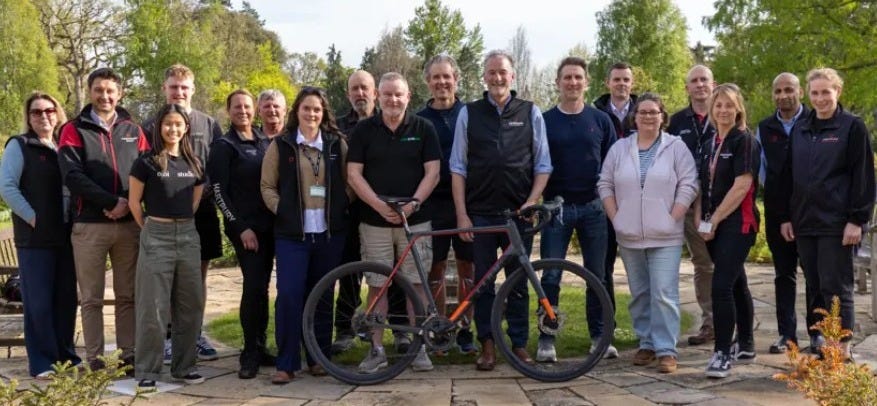
A Gloucestershire-based grassroots charity dedicated to reducing social isolation and improving wellbeing for disabled children and adults through inclusive sport and physical activity will be the beneficiary of an extraordinary effort by Hartpury University and Hartpury College this summer. Staff, students, governors and supporters plan to cycle 270km (170 miles) from the most westerly point in Wales back to Hartpury from 29 June to 1 July.
Founded in 2016, Goals Beyond Grass began with powerchair football and has since expanded to deliver a wide range of inclusive sport and community programmes. The charity creates safe, welcoming environments where disabled people can build confidence, friendships and a sense of belonging through physical activity. To read more and support the ride click here.
Diary Dates…
Tuesday:
How to get more leads through your website. Henny Maltby, a specialist in growth marketing techniques, will show you how to generate online traffic and position yourself in front of your competitors’ audience. The Growth Hub, SGS College, Stroud. 9am to 2.30pm. More here.
Wednesday:
How to create your 12-step social media strategy. Emma Provins of Skylight9 will talk you through how to utilise social media for business and improve what you’re already doing. At The Growth Hub, Tewkesbury, from 10am to 1pm. More here.
Thursday:
💻 CyNam is supporting Licence to Innovate at Cheltenham Science Festival. The event explores breakthrough technologies, from advanced manufacturing to AI, and how innovation can support the UK’s future technology capability. Includes networking and a panel discussion. Find out more via CyNam’s events page.
Friday:
Friendly & Informal Business Networking | Gloucester Ladies Who Latte. Wheatstone Inn, Barnwood, Gloucester, from 10am to 12pm. More here.
Worth knowing about too…
💻 CyNam is also hosting In Machines We Trust? Our summer headline event is on Thursday, 11th June, from 6:00 pm at Hub8 MX, Cheltenham. The event will explore how trust is built, tested, and engineered in machine-driven environments, examining autonomy, accountability, and control as AI systems increasingly influence decision-making. Tickets are just £5. Find out more via CyNam’s events page.
🫂🌍💷 Calling all B Corps: One of the things Gloucestershire seems to do very well is B Corp. In terms of the number of businesses that have made the grade, the county is a hotspot. Gloucestershire B Local is dedicated to supporting that group and is due to stage a best-practice webinar of general interest. This one is on local economic development in Gloucestershire. It’ll ask questions like ‘Why does the local economy matter? What is being done about local economic development for Gloucestershire? How can we make sure the local economy grows and becomes more successful, thereby supporting business growth in the region?’. Panellists will include Max Wilkinson MP for Cheltenham, Phil Clement, head of inward investment in the growth and enterprise team at Gloucestershire County Council, Jacqueline Randall of the Cotswold Collective, and Adam Vines of Together Gloucestershire. Due to take place on Mon 8 June from 12.30pm to 1.30pm. Register here.
Briefing Notes…
⚖️ Business and employment law specialists Sherborne Solicitors has strengthened and expanded its team with the appointment of Alexander Robinson as an assistant solicitor in the its corporate department. Robinson joins the Cheltenham firm from WSP Solicitors, which has its head quarters in Stroud, where he gained experience in corporate and commercial law, as well as commercial property law. More here.
⚖️ Growth at Gloucestershire law firm leads to new appointments in its commercial property and child law teams. WSP Solicitors has announced the expansion of its commercial property and child law teams with the appointments of senior associate, David Ashcroft and associate solicitor, Jessica O’Shea. The firm’s newest hires are part of its strategic growth plan as demand for its commercial property and family law work continues to grow. More here.
🧨💥A directors of a Cheltenham business has been fined for illegally storing more than 1,000 kg of explosives at his business premises. Chase James Gardiner, 42, of Hales Road, Cheltenham, and the sole director of Platinum Home Cinema (also Hales Road), was fined £3,986 with the business fined £11,200 and ordered to pay costs of £10,634.30. The total fine paid being £25,820.30. More here.
🏘️Gloucestershire residents have blasted the launch of a strategy to protect nature launched at the same time as a new blueprint is revealed for development that could see a 3,500-home new town near the Malvern Hills. Forest of Dean District Council new Nature and Climate Emergency Strategy 2026 – 2040 sets out commitments to embed nature recovery and climate resilience into planning, as well as empower local communities to shape the district’s future. But the council is also considering plans for new settlements off the A40 at Churcham and A417 in Redmarley. More here.
🌳There are fears the Forest of Dean’s bid to become a Unesco biosphere reserve is now in peril after civic chiefs voted for six months of further consultation. The council has been working on applying for the status to recognise the woodland as in the same league as places such as Yellowstone or Florida’s Everglades in the USA and the Galapagos Islands in the Pacific Ocean. The aim being to protect wildlife while boosting eco-tourism, sustainable agriculture and green business. More here.
The Raikes Journal is a community interest company. Everything you read is made possible by our incredible Founding Partners: QuoLux, Willans LLP, Gloucestershire College, Merrell People, our sponsors, our Founding Members and wonderful paying subscribers.
Readers who upgrade to become a paid subscriber become part of this CIC too (from £2.30 a week). It helps make us sustainable, allows you to see past the paywalls, comment on our stories, and know you’re making possible the county’s only editorially-led digital magazine dedicated to delivering quality journalism for Gloucestershire about its businesses, charities, education and training sectors.
Raikes is the only independent website approved to use the BBC’s local Government copy. It recognises Raikes as independent journalism.
‘Striking’ plans for Cavendish House unveiled
A £100m scheme to reinvent Cheltenham town centre’s empty Cavendish House, transforming it into a vibrant town centre destination, have been unveiled. But will it happen?

‘Striking’ plans to transform Cheltenham’s long-empty Cavendish House site into a vibrant town centre destination, complete with a grand public square, elegant shopping arcades, cafés, restaurants, homes and striking public spaces, have been unveiled.
The visionary scheme for the Promenade landmark known as ‘Cavendish Exchange’ has been developed by Cynthia Hartmann, founder and creative director of Interior Design CH and is supported by Cheltenham Civic Society (CCS), which has helped test its commercial and financial viability.
No formal planning application is expected to be submitted for this scheme but the ambitious £100 million proposal reimagines one of the spa town’s most prominent and problematic vacant buildings as a lively mixed-use quarter, reconnecting the Promenade with Regent Street and the Everyman Theatre.
The Civic Society says the plans represent a bold and detailed iteration of the initial concept put forward by them in 2024 as part of its long-running campaign to make sure that any development proposal will benefit the town, not just the investors.
Will the unveiling of the scheme spur on site owner Canada Life, which has spent years without bringing forward a deliverable vision or redevelopment proposal? More here.
How to draw up a business plan for good growth - in a weekend
Two-thirds of UK firms don’t have a business plan, which might lead many to think if they’re doing fine, why bother? Imagine how much better they could do if you knew where they’re going and why.
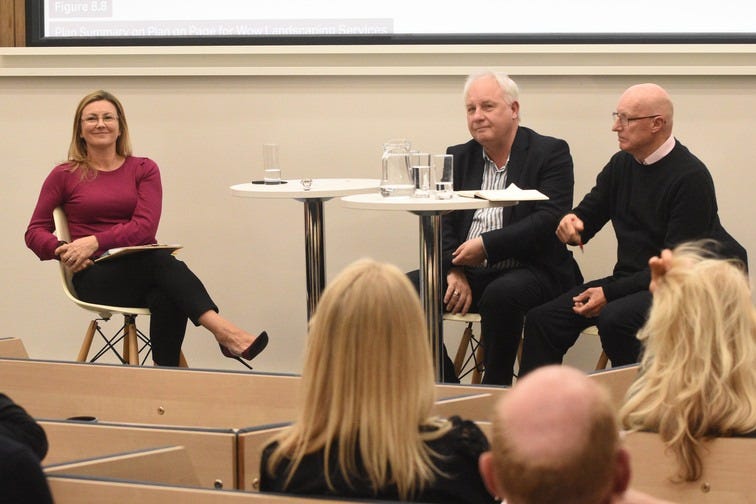
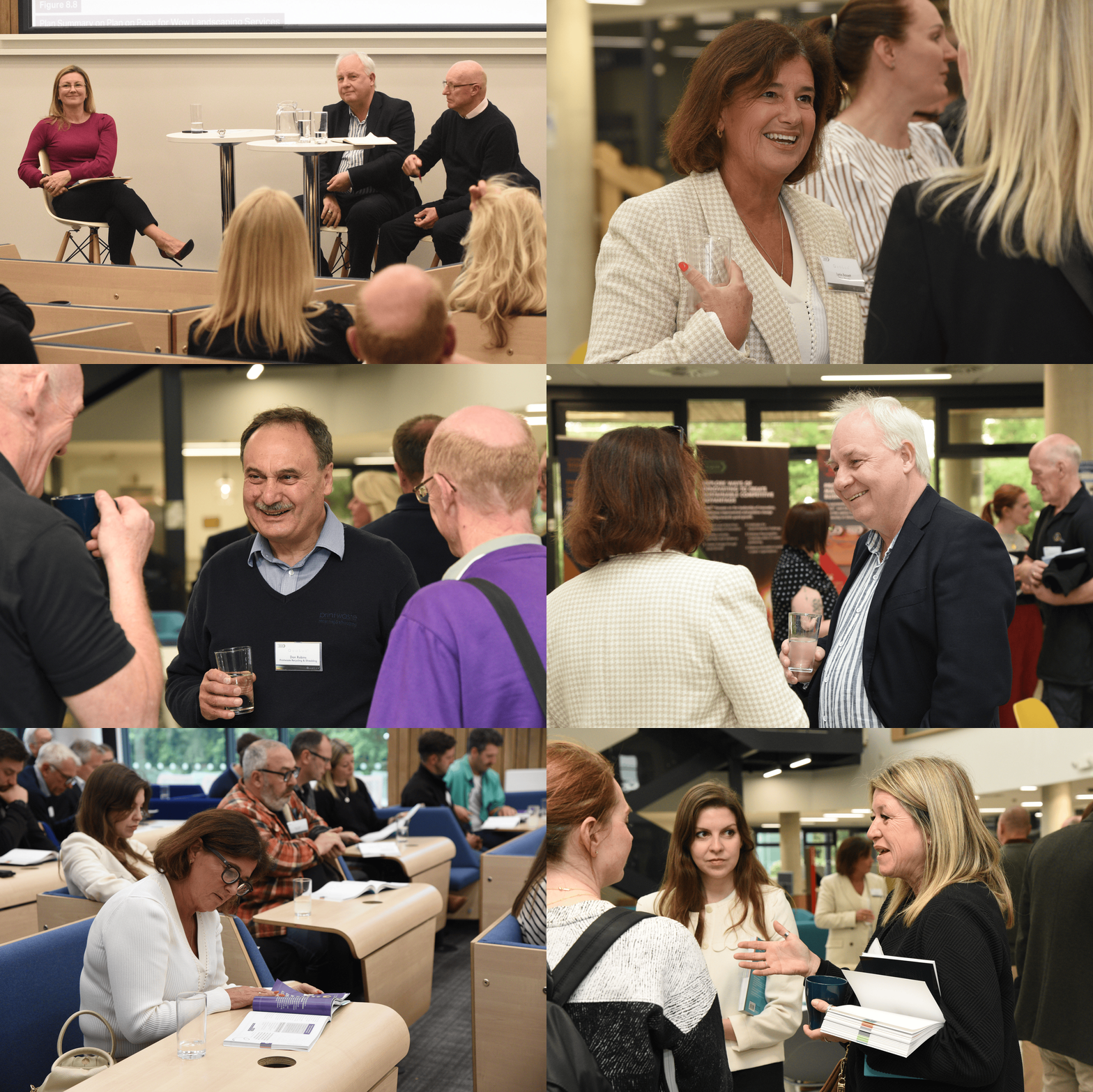
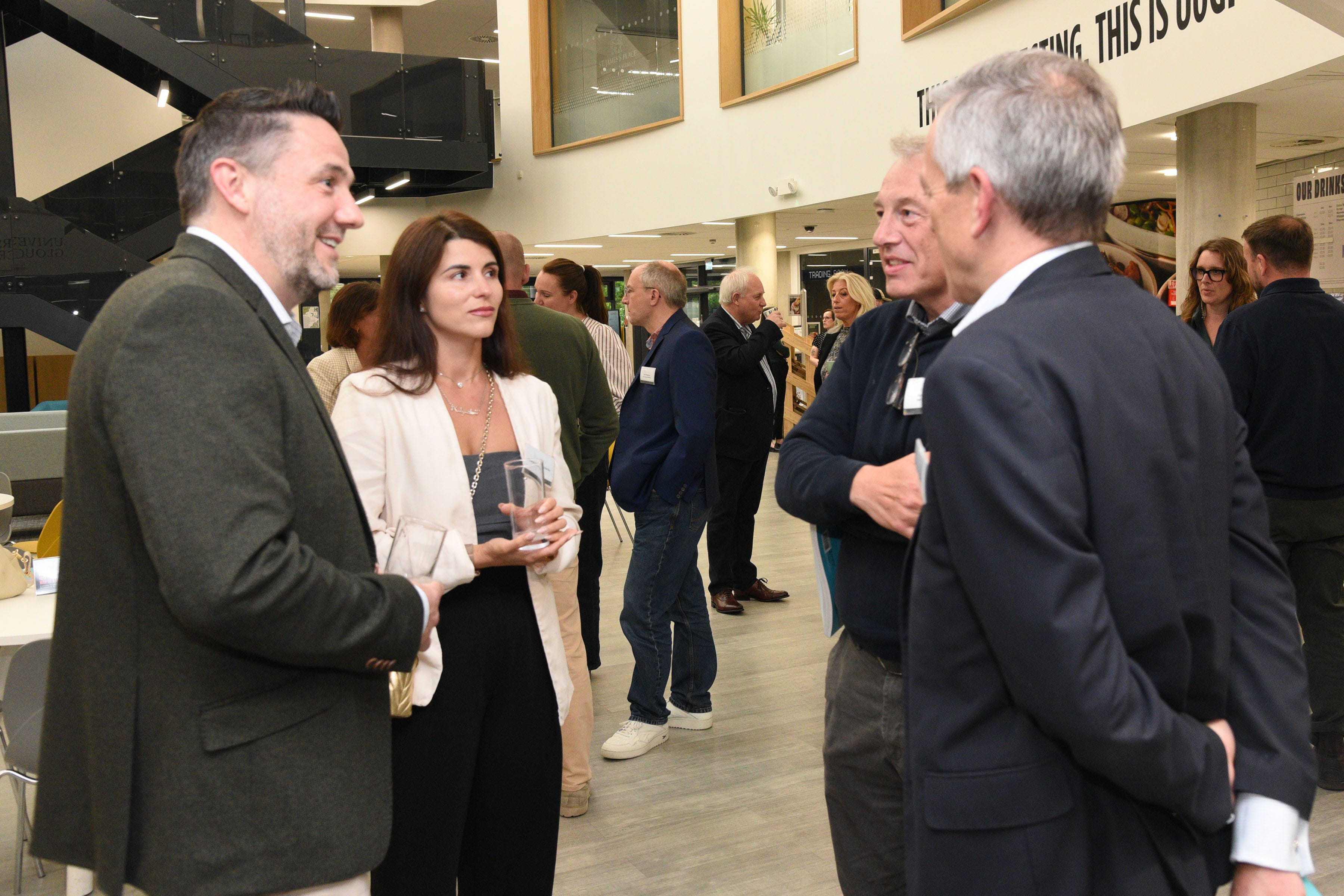
Even events led by best-selling authors of business-focused books don’t tend to have the same draw as their peers in fiction, but try telling that to those who almost filled a lecture theatre at the University of Gloucestershire recently.
Almost fifty businesspeople took the limited tickets available to hear Dr Stewart Barnes and Professor Steve Kempster interviewed by Jo Draper of leadership development specialist QuoLux about their book, Realising Good Growth: A Practical Guide for Business Leaders.
Why so much interest?
Generally, growth has become such a challenge for UK plc the Prime Minister and Chancellor are obsessed with it. In 2025 GDP was 1.4 per cent and in the first quarter of 2026 0.6 per cent. Perhaps they should have hightailed it down to Oxstalls to listen to the debate.
More specifically, most attended because they know that the organisation which has been road-testing the ideas in the book, which Barnes also co-founded, is onto something.
Gloucester-based QuoLux delivers leadership development for businesses and organisations across the UK and beyond.
Its cohort now numbers more than 1,000, and businesses and organisations it’s worked with have, on average, enjoyed increases in sales (up 42 per cent), productivity (up 47 per cent), employee growth (up 19 per cent) and profitability (up 197 per cent).
What makes it doubly appealing is this is not just about leadership and growth with a focus on profit only.
In a world where we now understand growth comes with costs for us and our planet – what Kempster calls one of the ‘moral challenges’ of out time – their book describes ‘good growth’, growth that results from a business that has become a force for good.
But to achieve that, said Barnes, you first need to have a good understanding of your business - and a plan.
“Two thirds of businesses don’t have a plan. You can take this book, work through it, and produce a business plan in the space of a week,” he said.
Build the right plan, the pair argue, and you really can achieve that positive impact.
If you’ve heard of B Corp, the book explores similar ideas: that by focusing on key areas, including people and planet, a business can achieve what Kempster has coined Good Dividends.
The thinking is that a purpose-led business that is conscious of its impact on people, planet and community – that works to achieve social value with every step – will be more driven, more focused, more engaged, more impactful and more profitable.
It will deliver what Kempster calls a virtuous circle of good dividends, where relationships sustain and grow because people buy into what the business is and what it does, staff are engaged and productivity is up.
Their text takes and beautifully distils these ideas into a handbook for action, a Haynes manual for your business; simple to follow, bite-sized chunks with inspirational quotes and QR codes pointing you to digital tools to help build that business plan.
It maps a process that will help business leaders better understand what their company stands for, what benefits it delivers, what it is doing that is positive and to help them bring those key messages to the fore to create that purpose-led ethos.
“You can do this on your own or with your senior management team, over a number of sessions or in a couple of days. You should be able to easily achieve a concise, single-page business plan,” said Barnes.
“Some of the businesses that have done this already have these plans hanging on walls around their business for everyone to see, to remind them of what they stand for.”
Cathia Jenainati, professor of gender and leadership and head of the School of Business, Computing and Social Sciences at the University of Gloucestershire, asked Barnes and Kempster whether there was evidence their methods could benefited every member of society equally.
And Abby Guilding, director of fundraising for the charity Well Child, said: “From a charity’s perspective, we need to find partners to support us. It is incredibly challenging out there in this respect.
“Can we use the techniques you talk about to show companies what they can get from partnering with us, to help them better understand how the relationship will generate value?”
Eighteen powerful, real case studies in the book include the story of Cotteswold Dairy’s radical solution to its employment churn – taking on and train inmates from a nearby prison, employing the best of them when they have served their sentences.
Rather than put its existing 450 staff on the defensive, the counterintuitive thinking engaged staff at all levels, created a new-found sense of what sort of business Cotteswold Dairy stands for and wants to be, it empowered staff to shape that reality which further motivated and enthused, and in providing meaningful work for former inmates it helped solve the issue of staff turnover.
“It also added a quarter of a million pounds saving to the bottom line,” said Kempster, underlining his earlier point - that energy spent creating purpose also drives profit.
Barnes also pointed both of them to the case study of The Nelson Trust and what QuoLux calls its SGD Configurator, a digital tool found via a QR code in the book.
It allows firms to quickly map what they do across the 17 Sustainable Development Goals and the 269 targets of the United Nations, criteria widely used by major firms to help make procurement decisions.
These SDGs include ensuring an organisation’s actions deliver no poverty, zero hunger, quality education, gender equality, reduced inequalities, affordable clean energy, decent work and economic growth, industry, innovation and infrastructure, reduced inequalities, sustainable cities and communities.
The Gloucestershire-headquartered Trust is a charity that supports people dealing with substance additions. Up against a major competitor in a bidding process, it needed to communicate the impact it had.
It used the SGD configurator to helped it demonstrate its impact, and credits it as key to a dramatic win that led to it near doubling of its ‘turnover’ overnight. It makes for powerful reading.
“In these cases, fully engaged people led to great business wins. Business flourishes, communities flourish, the whole planet flourishes,” said Barnes.
“This is exactly what the book is meant to help address. It is about having purpose-led conversations about how we can create these benefits for others outside out business.
“The challenge is that often no one has any experience of having such conversations. It’s about little steps, about learning.
“Seven out of 10 businesses in the UK don’t have any training to help them do that.
“Most of them went into business with purpose, but they forget along the way as the business takes over.
“Reminding themselves, re-evaluating, identifying what it is they do and why they do it will help them focus on where they want to go and what impact they want to make. It can be transformational.”
The preface to the book says: “We can change the nature of growth, reframe the purpose of business and galvanise leadership. Too often we think it is all down to governments to address these issues.
“For sure, they establish incentives and punishments to guide our behaviours, but they are not the engine room for change – and certainly not with regard to growth.
“That lies with business and the leaders of these businesses. If we say countries and companies are both ‘entities’, then 150 of the top 200 largest entities in the world, defined by size, are companies.
“But these are just the largest businesses … picture the 150 as the tip of a huge pyramid made up of more than 300 million businesses of all sizes worldwide.
“Just imagine the impact of business leadership if it could generate good growth – where people, planet and profits all flourish. Businesses should AND CAN play a huge and crucial role.”
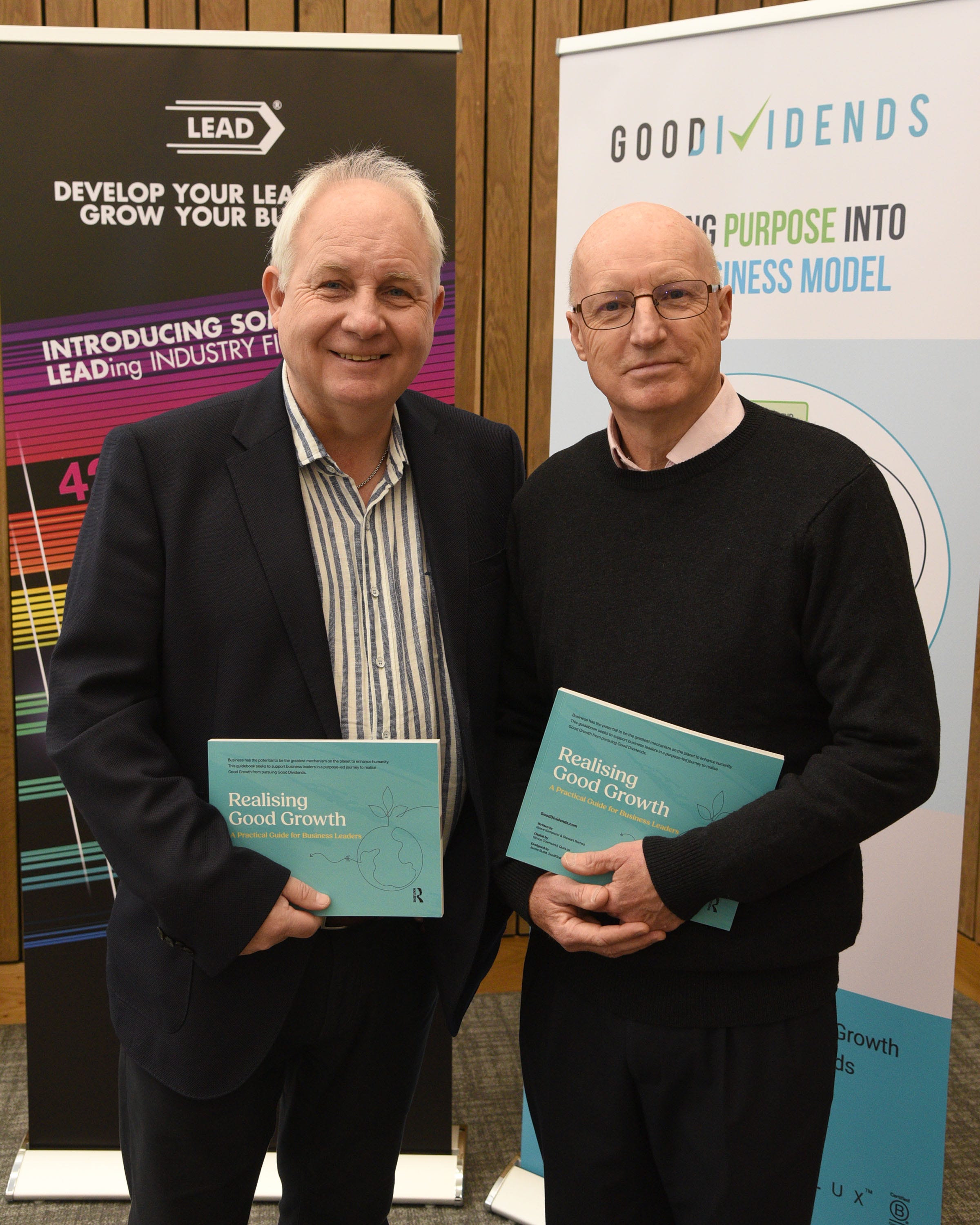
Realising Good Growth: A Practical Guide for Business Leaders, is published by Routledge and was designed by Jamie Rudd, of SoulKind.