


Dear reader,
Welcome to Monday’s The Raikes Journal.
It’s an edition given over to the fallout from the political upheaval afoot in our county, country and internationally – from the appointment of Andy Burnham as our new Prime Minister to the uncertainty of devolution now gripping Gloucestershire and the unstable international stage.
First, Malcolm Prowle, professor of performance management at the University of Gloucestershire, spells out his view on the impact of the UK’s incredibly unstable political environment. It’s not a very positive picture, but there is a silver lining.
A solution to better outcomes might just lie in devolution, suggests Prowle – the process currently gripping Gloucestershire’s attention as it hurtles towards the dissolution of its six local authorities and county council and towards elections for a new single authority in 2028.
Already businesses smell opportunity. Mark Terry-Lush of the Forest of Dean Economic Partnership spoke up on Friday at a conference on investment in Gloucestershire, challenging two of the county’s MPs to commit to the importance of ensuring the Forest of Dean is not forgotten in the upheaval.
Now the FEP has gone further and spelt out more formal plans below to hold our new county chiefs to account.
And then we look at how significant the impact of the political climate already is, both locally, nationally and internationally, for Gloucestershire.
At the same conference we mentioned above, Ruth Dooley, a senior partner at accountants Hazlewoods, also challenged Alex McIntyre, MP for Gloucester, and Sir Geoffrey Clifton-Brown, MP for the North Cotswolds.
Would they commit to lobbying Government for the promised funds for Junction 9a of the M5, she asked?
News broke earlier this month that the Government could be about to retract its commitment to the new motorway junction, said to be key to economic prosperity in the north of Gloucestershire.
Neither McIntyre nor Clifton-Brown was forthcoming.
More on the conference later in the week. A positive vibe, a recognition that working together is the way forward and an overwhelming desire to do better for Gloucestershire, but also a sense of the pressures too. A sense that choices will have to be made – and it is those choices that will determine what get’s done and what get’s dropped, good or bad.
Best regards,
Editor | 07956 926061 | LinkedIn: Andrew Merrell | andrew.merrell@raikesjournal.co.uk
Charity of the week…
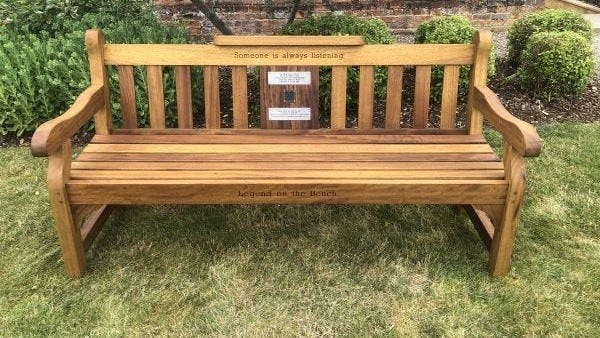
A very special bench has been installed at Gloucester’s Phoenix Cafe at Abbeydale Sports and Community Centre. It’s the result of the efforts of city woman Mary Barnes who raised £2,000 from donations to make the bench possible. It is one of a growing number of seats being put in place across the UK, supported by the charity Legend on the Bench - launched by ex-Tottenham Hotspur and Chelsea midfielder footballer Micky Hazzard. His nephew, Jay Lee Mead, took his own life in 2019. The benches signify the importance of a place to sit, to talk, and to listen. Each one carries the message ‘someone is always listening’, and a plaque with phone numbers for helplines including Samaritans, M.I.N.D, Suicide Prevention UK, Childline, and even the Survivors of Bereavement by Suicide charity. Barnes lost her partner, Paul Close, when he took his own life two years ago. A second bench, with money raised by another Gloucestershire woman, Jane Roberts, is also due to be installed in Stroud. Read more here and learn by Sunflower Suicide Prevent backs idea.
Political instability is holding back UK economic growth
As we welcome a new Prime Minister and Gloucestershire rushes towards devolution – a complete re-think of how our local Government is run – Malcolm Prowle looks at symptoms, causes and opportunities.
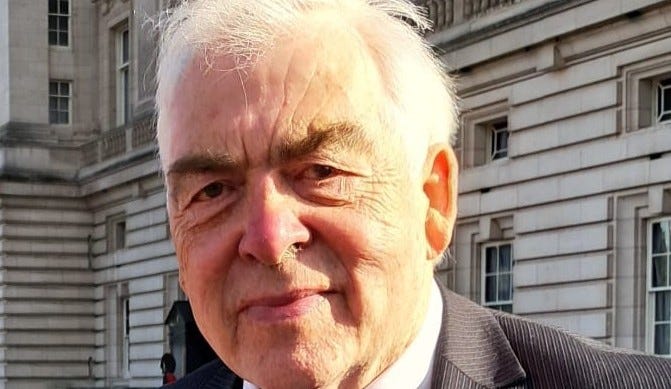
The UK’s long-term economic prospects are being undermined by persistent political instability, weak policy delivery and excessive centralisation, according to Professor Malcolm Prowle.
Prowle, professor of performance management at the University of Gloucestershire, says today’s appointment of Andy Burnham as the UK’s seventh new prime minister since 2010 is not a sign of a healthy governing system but a warning signal for investors, businesses, public services and communities across the country.
Prowle said: “So many different prime ministers in 16 years is not simply political drama – it is a serious economic problem. Growth depends on stability, consistency and long-term planning. The UK has had far too little of all three.”
Before the 2008 financial crisis, UK economic growth averaged around 2.5 per cent to three per cent a year. Since then it’s been closer to one per cent to 1.5 per cent, reducing tax receipts, limiting the scope for improving public services and leaving households feeling less secure, said Prowle.
At the same time, he argued, Britain continues to suffer from some of the deepest regional inequalities among advanced economies, with London and the South East pulling far ahead of many towns, cities and former industrial areas.
“The UK does not lack ideas for growth. What it lacks is a stable and effective system for implementing them. Policies are announced, revised, abandoned and relaunched, often before they have had any chance to work,” he said.
Policy areas should, argued Prowle, include skills, healthcare, green energy, transport and regional investment to support both growth and greater equality.
What of devolution – the political turmoil on a local level which will see Gloucestershire’s six local authorities and county council dissolved and replaced with one?
According to Prowle, without deeper devolution, stronger regional institutions and longer-term policy planning, Britain will struggle to escape its low-growth cycle.
You can read the full article here.
Businesses will hold new unitary authority to account with charter

Businesses in Gloucestershire are to create an economic charter of measurable commitments for the Forest of Dean to hold the county’s new-look single unitary authority to account and ensure the district is not forgotten.
The Forest of Dean Economic Partnership is to develop the charter through open consultation with businesses in the district over the coming months, staging sessions in its four market towns starting this autumn.
The resulting document will then be published ahead of next year’s May elections for the new single authority that will replace our current six local authorities and county council.
It’s not just about holding the new Gloucestershire-wide council to account, it’s about holding our new Prime Minister, Andy Burnham, to account too.
In a speech in June, as he positioned himself for leadership, Burnham said he would deliver “good growth in every postcode and hope in every heart”.
And yet when the Secretary of State published the four-page statement last week explaining the decision for Gloucestershire the Forest of Dean only once.
Nicola Bird, chair of the Forest Economic Partnership, said: “Now the unitary is decided our job is to make sure the Forest of Dean is not simply part of the conversation but shaping it – and that one sentence in a Government letter becomes a set of commitments the Forest can hold the new council to.
“Success will not be measured by governance structures. It will be measured by whether a young person in Cinderford has greater opportunities, whether a business in Mitcheldean can grow with confidence, whether manufacturers in Coleford can recruit the skilled workforce they need, and whether investment reaches every part of Gloucestershire – not just the obvious growth corridors.
“The next Prime Minister has promised good growth in every postcode. We say: ‘excellent’; we’ll help you keep that promise, and we’ll measure it. GL14 to GL18 are postcodes too.”
According to the FEP the Forest of Dean is home to around 3,800 businesses, more than 90 per cent of which are micro businesses employing fewer than 10 people.
Manufacturing is the district’s largest industrial employer.
Its visitor economy alone is worth £400 million annually.
It is also an area where the average salary is 11 per cent below the England average.
“When the (Forest of Dean) district council goes, the Forest Economic Partnership will be the independent voice that speaks for them – and the charter is how we will turn the promise of growth in every postcode into something the Forest can measure,” said Bird.
What the charter will cover…
The final commitments will be shaped by Forest businesses themselves, but the consultation will focus on the areas where the gap between the Forest and the rest of the county is widest:
skills, pay and career pathways west of the Severn;
recognition of the visitor economy as a strategic sector;
practical support that reaches micro and small businesses in every market town;
protecting economic development capacity for the Forest through the transition; and
a guaranteed Forest business voice in the new council’s economic structures from day one.
FEP would report publicly on progress against the charter each year, beginning with the shadow authority in 2027.
Businesses that want to help shape the charter or join the FEP can register their interest at foresteconomicpartnership.co.uk.
The Raikes Journal is a community interest company. Everything you read is made possible by our incredible Founding Partners: QuoLux, Willans LLP, Gloucestershire College, Merrell People, our sponsors, our Founding Members and wonderful paying subscribers.
Readers who upgrade to become a paid subscriber become part of this CIC too (from £2.30 a week). It helps make us sustainable, allows you to see past the paywalls, comment on our stories, and know you’re making possible the county’s only editorially-led digital magazine dedicated to delivering quality journalism for Gloucestershire about its businesses, charities, education and training sectors.
Raikes is the only independent website approved to use the BBC’s local Government copy. It recognises Raikes as independent journalism.
A telling sign of the battles ahead for Gloucestershire?
When Ruth Dooley asked two of the county’s MPs what will become a Junction 9A - crucial to Gloucestershire’s economic development plans they didn’t sound too confident of its delivery.
Devolution may well deliver bigger and better for Gloucestershire in the long run, but in a turbulent political world is a major blow to one of the county’s biggest economic drivers a sign of what’s to come?
Tewkesbury Borough has for years been Gloucestershire’ most effective wealth creator. In the county’s joint core strategy it is home to 75 per cent of Gloucestershire’s employment land.
To continue that growth, which has seen it out perform not just every other area of the county but almost every other local authority areas in the UK, it needs a new motorway junction.
And as far as anyone knew that was all agreed by Government. Junction 9A, just south of the existing Junction 9 for Tewkesbury was a done deal – until this this month, when it suddenly looked like the Government had changed its mind, putting into question such detail as plans for 25,000 new homes for the county.
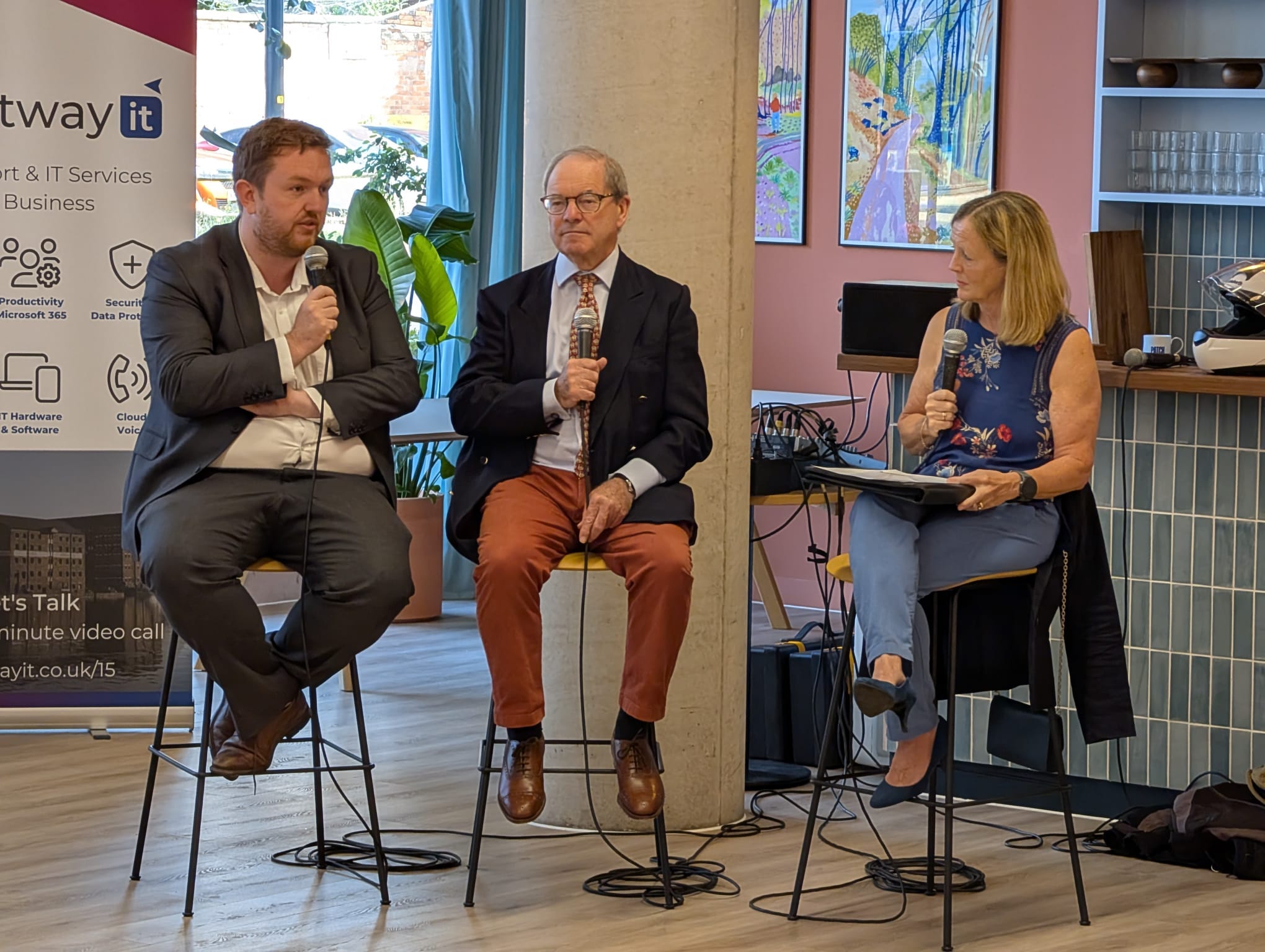
Ruth Dooley, a senior partner at Hazlewoods accountants began the Driving Gloucestershire Investment conference at Patch in Gloucester on Friday by asking Alex McIntyre, MP for Gloucester, and Sir Geoffrey Clifton Brown, MP for the North Cotswolds, whether they would continue lobbying for the key infrastructure project.
